

Guides · Selling
Capital gains tax when you sell a house in Washington
Washington's capital gains tax does not apply to the sale of a house. The statute excludes real estate outright, so the 7% you may have read about is not a tax you pay on your home. What you can owe is federal capital gains tax, and most people selling a home they lived in owe nothing there either: the first $250,000 of gain is excluded, or $500,000 for a couple filing jointly. The tax you will definitely pay is the real estate excise tax, which is a different tax with a different name.
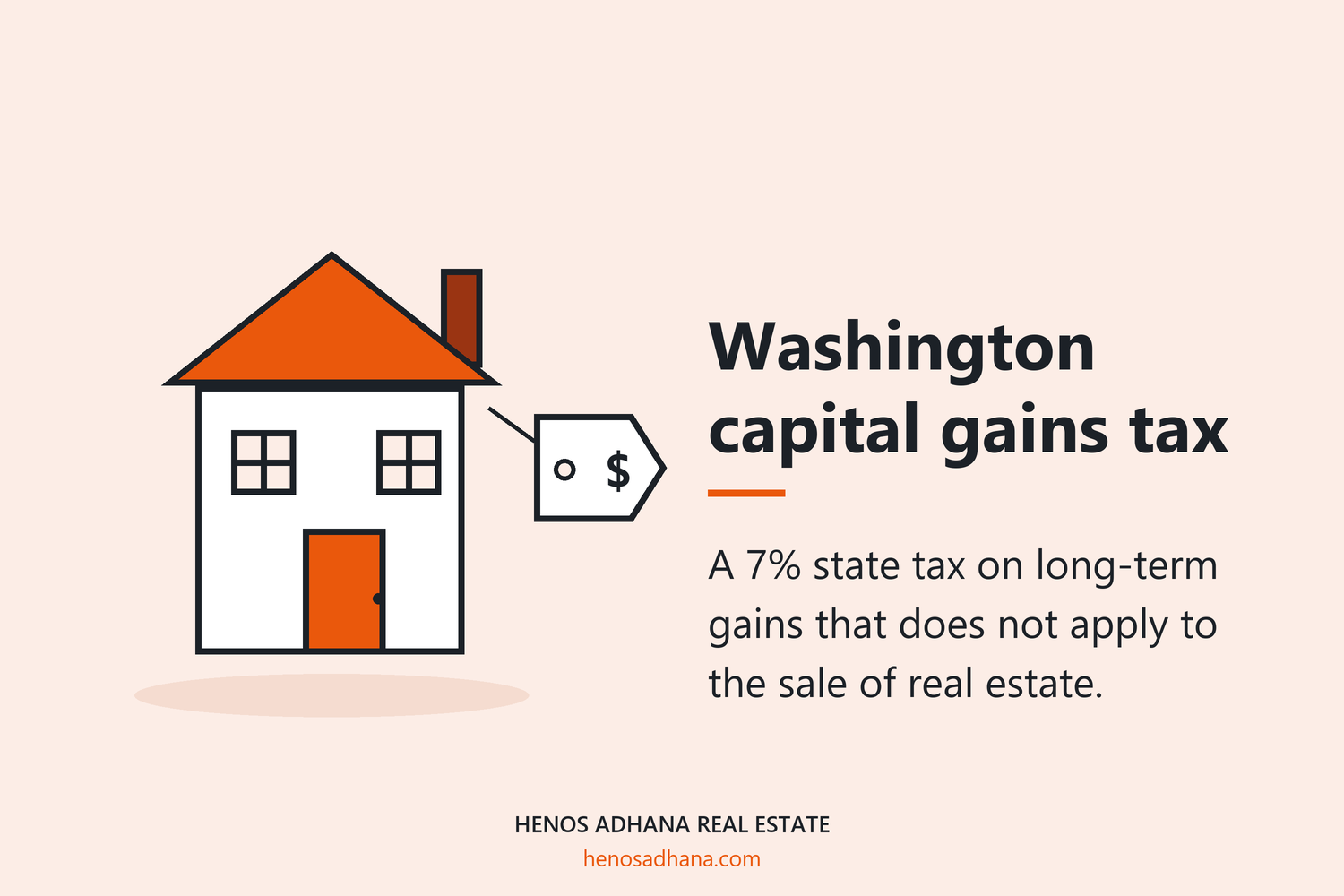
Washington's capital gains tax, in one line#
The Washington tax that does not apply to you#
Washington has had a capital gains tax since 2021. It is 7% on long-term gains above a standard deduction, which was $278,000 for 2025 and rises with inflation. It applies to things like stocks, bonds and business interests.
Real estate is exempt. The Department of Revenue lists it plainly among the exemptions, and the exemption reaches further than the house itself: an interest in a privately held entity is also exempt, to the extent the gain is attributable to real estate that entity owns directly.
So if you are selling a house in Washington, this tax is not your problem. It comes up constantly anyway, because the headline when it passed was "Washington capital gains tax" and nothing in that headline said real estate was carved out.
Sources
- Capital gains tax, Washington State Department of Revenue
- RCW 82.87, capital gains tax, Washington State Legislature
Not sure whether to fix it or price it in?
Find out what it would actually sell forThe federal tax that might#
Federal capital gains tax is the real question, and for most sellers the answer is still nothing, because of the exclusion on a main home.
You can exclude up to $250,000 of gain from your income, or up to $500,000 filing a joint return. To qualify you must have owned the home for at least 24 months of the last five years, and lived in it as your residence for at least 24 months of the last five years. The two tests are separate, and the months do not have to be consecutive.
One more condition catches people who move often: you are not eligible if you already excluded the gain from another home sale in the two years before this one.
If your gain fits inside the exclusion and you meet the tests, there is usually nothing to report. Above it, the excess is taxed at long-term capital gains rates, which depend on your income.
Sources
- Topic no. 701, Sale of your home, Internal Revenue Service
Gain is not the same as the price#
This is where the arithmetic goes wrong, and it goes wrong in the seller's favour more often than not.
Gain is not what you sold for. It is what you sold for, minus the cost of selling, minus your basis. Basis starts at what you paid and grows with the capital improvements you made over the years: the roof, the addition, the new kitchen, the foundation work, the sewer line.
Find the receipts before you assume you have a tax problem. Twenty years of improvements on a Seattle house routinely add six figures to basis, and that comes straight off the gain. Repairs do not count, improvements do.
Selling costs come off too, including the commission, excise tax and title and escrow fees.
What you actually pay at closing#
The tax a Washington seller really pays is the real estate excise tax, and it is withheld at closing whether you have a gain or not. It is charged on the sale price, not on profit, at graduated state rates plus the local rate.
That is the one to budget for. How the excise tax is worked out, band by band is its own guide, and what else comes out at closing is another.
When there is a real bill to plan for#
There are situations where federal tax genuinely lands, and they are worth naming because the exclusion does not cover them:
A rental or investment property. The main-home exclusion does not apply, and depreciation you claimed over the years is recaptured and taxed, separately from the gain itself.
A second home or a cabin. No exclusion, because it was not your residence.
Gain above the exclusion. On a house bought decades ago in a neighbourhood that has quadrupled, $500,000 of exclusion can run out. That is a good problem, but it is one to model before you list, not after.
A house you inherited. Basis generally resets to the value at the date of death, which often leaves little or no gain on a sale soon after. This one usually works in your favour and is widely misunderstood.
I am a broker, not a CPA, and the numbers above are the public rules rather than advice about your return. If any of these four describe you, the conversation to have is with an accountant before the house is listed, because some of the options narrow once it is under contract.
Common questions#
Does Washington's capital gains tax apply when I sell my house?
No. Real estate is exempt from Washington's capital gains tax. The exemption also covers an interest in a privately held entity, to the extent the gain is attributable to real estate the entity owns directly.
Do I pay any tax when I sell a house in Washington?
Yes, the real estate excise tax. It is charged on the sale price rather than on your profit, at graduated state rates plus the local rate, and it is taken out at closing whether you made money or not.
How much gain can I exclude from federal tax?
Up to $250,000, or up to $500,000 on a joint return, if you owned the home for at least 24 months of the last five years and lived in it for at least 24 months of the last five years.
What if I have not lived there for two full years?
The full exclusion needs 24 months of ownership and 24 months of use within the five years before the sale. A partial exclusion is sometimes available when the move is for work, health or certain unforeseen circumstances, which is a question for your accountant.
Can I use the exclusion twice?
Not within two years. You are not eligible if you excluded the gain on another home sale during the two years before this one.
Does the improvement work I did reduce the tax?
Capital improvements add to your basis, which reduces the gain. A roof, an addition, a kitchen, foundation work or a new sewer line all count. Ordinary repairs do not. Find the receipts before assuming you owe anything.
What about a rental I am selling?
The main-home exclusion does not apply to an investment property, and depreciation claimed over the years is recaptured and taxed separately from the gain. Talk to an accountant before listing, because the options narrow once it is under contract.
I inherited the house. What is my gain?
Basis generally resets to the property's value at the date of death, so a sale soon afterwards often shows little or no gain. It is one of the most misunderstood rules and usually works in the seller's favour.