

Guides · Investing
Where Washington's adult family homes are
Washington has 6,212 licensed adult family homes and 36,124 licensed beds, spread across 35 of its 39 counties. Five counties hold 85.6% of them, 80.3% of all homes are licensed for exactly six beds, and King County, which has the most homes of any county, ranks only seventh once you measure beds against the seniors on Medicaid who live there.
What this counts, and what it does not#
This is every adult family home that held a licence on 9 October 2026, taken from the Department of Social and Health Services feed of currently licensed homes. 6,212 homes, 36,124 licensed beds, in 35 of Washington's 39 counties.
A licensed bed is capacity, not a resident. Nothing in the state's licensing file says how many beds are occupied, and no public file does. A county with a high count is a county with a lot of licensed capacity, which is not the same as a county with a lot of people living in it.
The denominators are estimates. Population comes from the Census American Community Survey five-year estimates, and the Medicaid figure comes from table C27007. Estimates carry error bars, and they are widest where the population is smallest. Anywhere with fewer than 100 Medicaid seniors is left out of the ratio rather than shown with a number I do not trust.
No home is named. This is aggregate only. There are no operator names, addresses or phone numbers in it, and there will not be.
What follows is how to read it. The lookup itself, by county, city or ZIP code, is at the map.
Sources
- DSHS, currently licensed adult family homes, Department of Social and Health Services
- Census ACS table C27007, Medicaid by age, U.S. Census Bureau, 2020-2024 five-year estimates
Six thousand homes, and where they are#
Washington has 6,212 licensed adult family homes. Five counties hold 5,315 of them, which is 85.6% of the state in five of 39 counties.
King 1,818. Snohomish 1,185. Pierce 1,080. Spokane 635. Clark 597.
That concentration is the first thing to understand about this market. It is not spread across Washington. It sits in the Puget Sound corridor, plus Spokane and Clark, and thins out fast past the edge of those.
At city level the same thing happens again, and not where people expect. The city with the most licensed homes in Washington is Vancouver, with 521 homes and 3,038 beds. Then Tacoma with 380, then Spokane with 347.
Seattle is not at the top of that list, and neither is Bellevue. The homes are where the houses are affordable and single storey, which is a different map from where the money is.
Sources
- The live lookup, by county, city and ZIP code, built from the same DSHS file as this page
Have an address in mind already?
Book a call and I'll tell you what I'd doThe six-bed state#
4,990 of the 6,212 homes, 80.3% of them, are licensed for exactly six beds. Another 626 are licensed for five, 203 for eight, and just 9 in the whole state for seven.
The average home is 5.8 beds, and that average is doing almost no work, because the distribution is not a spread. It is a spike at six with a tail.
Six is the number the rules are built around, and it is the number almost everyone lands on. Going past it is a different decision: a seven or eight bed licence requires an applicant who has already held an adult family home licence for at least 24 months, has been licensed for six or more residents for the 12 months before applying, and has had two full inspections with no enforcement action in that window.
So when you compare two homes, you are almost always comparing two six bed homes. The variable is not size. It is the house, the county, and who is already operating nearby.
Sources
- Chapter 388-76 WAC, minimum licensing requirements, Washington State Legislature
What the housing stock looks like#
Two ratios that disagree#
A raw count tells you how many homes are in a place. It does not tell you how crowded that place is, because a county with ten times the seniors can hold ten times the homes and feel identical from the inside. For that you need a ratio, and there are two sensible ones.
Beds per 1,000 residents aged 75 and over. Simple, and the age band where most residents actually come from. Statewide that is 70.7.
Beds per 1,000 seniors aged 65 and over who have Medicaid. Statewide that is 228.3. This is the one the map leads on, because the thing an operator competes for is not seniors in general. It is seniors who will qualify for the care.
They disagree, and the disagreement is the interesting part. A county with a wealthy retired population looks crowded on the first ratio and empty on the second. A county with a poorer older population looks the other way around.
Neither one is demand. Medicaid enrolment stands in for who is likely to qualify for care, not who does, and adults under 65 with disabilities live in these homes too and are in neither denominator. The ratio is a yardstick for comparing places, nothing more.
The five counties that are the market#
By volume: King 1,818, Snohomish 1,185, Pierce 1,080, Spokane 635, Clark 597.
By the Medicaid ratio the order changes completely. Snohomish leads at 412.1 licensed beds for every 1,000 seniors on Medicaid. The statewide figure is 228.3. The median county is 50.5.
The gap between the top county and the median county is roughly eightfold. Two operators doing the same job, with the same licence and the same rules, are working in markets that do not resemble each other.
Read your own county's number against the median rather than against the state average. The average is dragged upward by the handful of counties that hold most of the homes.
King County is seventh#
King County has 1,818 licensed homes, more than any other county in Washington, and 41,699 seniors on Medicaid, far more than any other county. On the ratio it comes seventh, at 255.0.
Above it: Snohomish, Clark, Pierce, Whitman, Thurston, Spokane.
Every one of those counties has well under half King County's Medicaid senior population, and several have a fraction of it. They still carry more licensed capacity per senior.
This is the single most useful thing in the file, and it is the opposite of what almost everyone assumes. The biggest county is not the most heavily supplied one. If you have been avoiding King because you believe it is saturated, the ratio does not support that belief. It also says nothing about whether a home there could find residents: King has the highest house prices in the state, and that is a separate problem from the one this number measures.
The counties with none#
4 of Washington's 39 counties have no licensed adult family home at all: Columbia, Garfield, Pend Oreille, Wahkiakum.
All 4 are small, rural, and have an older population measured in hundreds rather than thousands. The absence is not a gap in the market waiting to be filled. It is what happens when the number of people who would ever need the service is smaller than one house.
The honest reading of a county with none is that nobody has found a way to make it work there, and the burden is on you to explain why you would. That is a very different sentence from the one people want to read into an empty space on a map.
What a thin county actually means#
A low ratio has at least four explanations, and only one of them is opportunity.
The population cannot pay. Thin supply often tracks thin private pay. If the county's seniors are overwhelmingly on Medicaid, the rate is what the state sets, and operators have already worked out whether that covers a mortgage there.
The houses do not suit. Adult family homes want single storey, wide doorways, bathrooms a resident can reach from the hall. Counties whose housing stock is two storey, old, or on steep lots have fewer houses that convert at a sane cost.
There are no caregivers. You can own the right house in the right county and still not be able to staff it. Rural labour markets are the quiet reason a lot of plans stop.
Or nobody has got to it yet. This does happen. It is the least likely of the four, and it is the one everybody assumes first.
Work out which of the four you are looking at before you put money on it. The map tells you where to ask the question. It does not answer it.
Reading a county before you commit#
Ten minutes with the lookup and a phone, before any of this costs you anything.
Work through these
- Pull the county's three numbers. Homes, beds and the Medicaid ratio. Write all three down
- Compare against the median county. Not the state average, which the big five drag upward
- Check every county that touches it. Borders matter more than lines on a map
- Open the city list inside the county. One city usually holds most of the homes
- Open the ZIP list inside that city. Concentration is tighter than almost anyone expects
- Count the eight bed homes. A different licence, and a much smaller pool of buyers
- Ring three homes and ask the private pay rate. It is in no public file. They will tell you
- Ask the same three about caregiver pay and staffing. The quiet reason plans stop
- Price a single storey three bedroom in that ZIP. The house is most of the capital
- Run the payment against six beds at the local rate. Before you fall in love with a house
The ZIP codes with a hundred homes#
Zoom past the county and the concentration gets much sharper. The file covers 175 cities and 268 ZIP codes. The densest single ZIP code in Washington is 98498 in Lakewood, with 187 licensed homes in it. Then 98208 with 161, and 98023 with 160.
A hundred and seventy eight adult family homes inside one postal code is not a market. It is a neighbourhood that has specialised, in the way some neighbourhoods specialise in car repair or restaurant supply.
If you are buying into one of those ZIP codes you are buying into an established cluster, with everything that implies: referral sources that already know the area, caregivers who already live nearby, and a hundred and seventy seven other operators who answer the same phone call you do.
Why clusters form where they do#
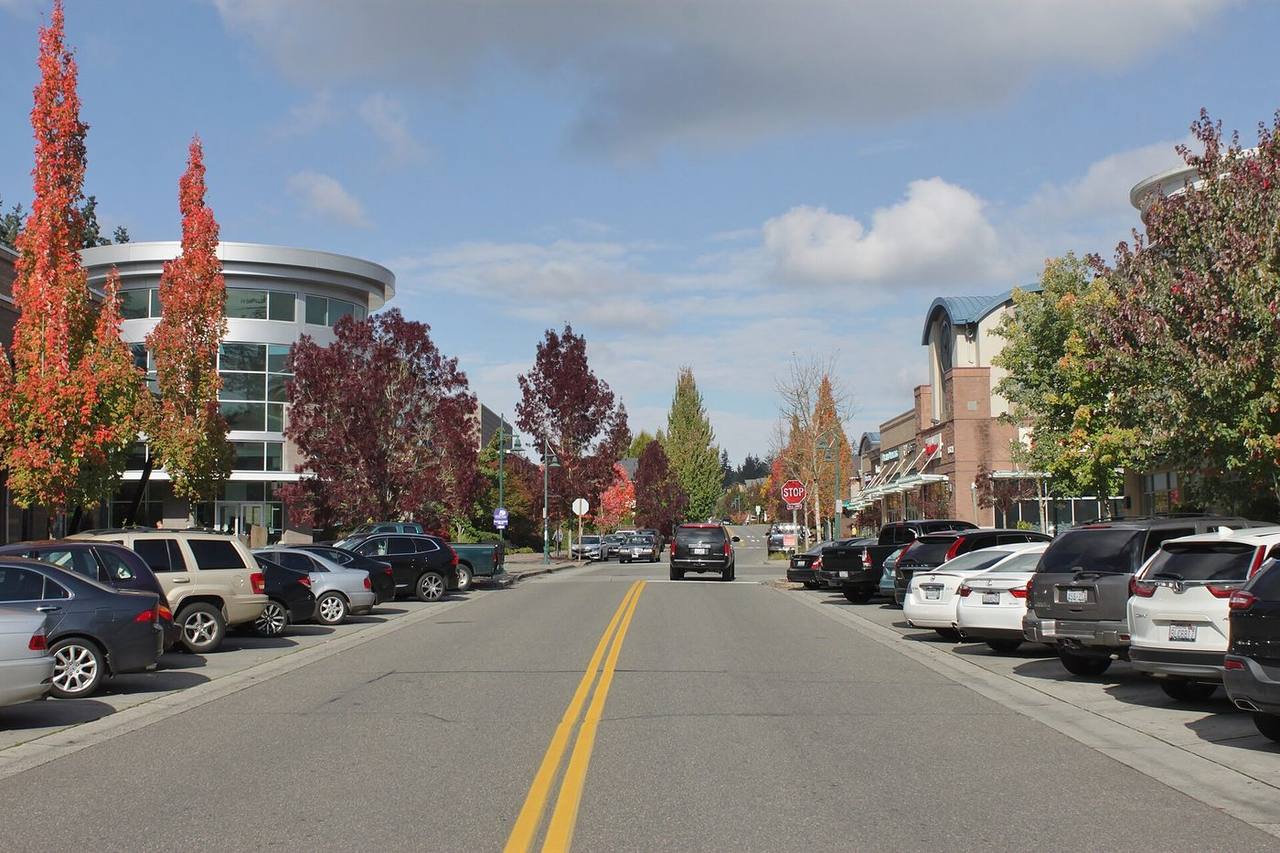
The dense ZIP codes have a type. Post war single storey housing on flat lots, built wide rather than tall, in suburbs that were affordable twenty years ago and are merely expensive now. Those are the houses that convert without structural work.
Clusters also feed themselves. Where there are already homes there are already caregivers who live within a short drive, nurse delegators who cover the area, and hospital discharge planners with a list. A new home in a cluster inherits an ecosystem. A new home on its own builds one from nothing.
That cuts both ways, and which way it cuts depends on whether your problem is finding residents or finding staff. Operators who have run one home for a while will usually tell you staffing is the harder of the two.
The places with seniors and no homes#
The file also lists ZIP codes that have Medicaid seniors in them and no licensed adult family home. The largest is 98104 in King County, with about 1,164 seniors on Medicaid and no home.
Several of the others are dense urban ZIP codes in central Seattle. That is the clue to what this list actually is. These are mostly places where a six bedroom single storey house with parking either does not exist or costs several million dollars, not places that have been overlooked.
I am including the list because leaving it out would be dishonest, and I am telling you what I think it means because publishing it without that reading would be worse. An empty ZIP code is a question. Most of the time the answer is the price of land.
What a cluster looks like on the ground#
What the ratio cannot tell you#
Four things this file will never show, each of which matters more than the ratio.
Occupancy. Nobody publishes it. A county could be full or half empty at the same bed count.
Rate. What a home actually charges, private pay or Medicaid, is not in any public file. The only way to learn it is to ring homes and ask, and operators will usually tell you.
Quality. Inspection and enforcement history is public, home by home, through the state's own facility lookup. It is not in these totals, and it is worth reading on any specific home before you go further.
Who is about to open. Homes are licensed every week. A ratio is a photograph, and the shutter closed on 9 October 2026.
Sources
- DSHS adult family home facility lookup, inspection and enforcement history, home by home
If you are buying an operating home#
Use the ratio to sanity check the price, not to find the home. You are buying a licence application, a house and a business at once, and the ratio only speaks to the third.
A home in a dense ZIP code is a known quantity: you can ring the neighbours, you can find out what the going rate is in that postcode, and the referral sources exist. A home standing alone in a thin county is harder to value because there is nothing to compare it with.
Remember that the licence does not come with the house. A change of ownership needs a new licence and a new application, your Medicaid contract is your own, and the seller owes every resident sixty days of written notice that tells them they may leave. Census can walk out between agreement and closing, so the price should be tied to census at closing rather than census at offer.
Sources
- WAC 388-76-10105 and 10106, change of ownership, the new licence, and the sixty day notice to residents
If you are opening your first#
Pick the county with your eyes open, then pick the house. Most people do it the other way round, find a house they like, and discover the market afterwards.
The ratio is one input of several and it is not the heaviest. The heaviest are whether you can staff it, what the local rate is, and whether the house will pass without structural work. A perfect ratio in a county where you cannot hire is worth nothing.
If you are weighing a cluster against an empty area: the cluster is the lower risk of the two. You are not first, which means somebody has already proved the economics work there.
Sources
- RCW 70.128.120, provider qualifications, who may hold a licence
What to pull before you write an offer#
Everything here is free, and all of it is quicker than the inspection.
Work through these
- County, city and ZIP counts for the exact address. From the lookup, not from the listing
- The same three for the two nearest ZIP codes. Clusters do not stop at postal boundaries
- The home's inspection and enforcement record. DSHS facility lookup, by licence number
- Private pay rates from three homes within two miles. Ring them and ask
- Caregiver wage, and whether those three are short staffed. The same three calls
- Licensed bed count, and whether it was ever higher. A reduction always has a reason
- Whether a Medicaid contract is held, and since when. It does not transfer to you
- Occupied beds today, in writing, by pay type. Capacity is not census
- The date the sixty day notice would have to go out. It starts before closing, not after
- A single storey comparable sale in the same ZIP. So you know what the house alone is worth
Common questions#
How many adult family homes are there in Washington?
6,212 licensed homes with 36,124 licensed beds, in 35 of the 39 counties, as of 9 October 2026. The count comes from the DSHS feed of currently licensed homes and refreshes every Monday.
Which county has the most adult family homes?
King County, with 1,818 licensed homes. But on licensed beds per 1,000 seniors on Medicaid it ranks seventh, at 255.0 against a state figure of 228.3, because it also has far more Medicaid seniors than anywhere else.
Which city has the most?
Vancouver, with 521 licensed homes and 3,038 beds. Not Seattle, and not Bellevue. The homes follow affordable single storey housing rather than wealth.
Are most adult family homes licensed for six beds?
Yes. 4,990 of 6,212, which is 80.3%, are licensed for exactly six. 203 are licensed for eight and only 9 in the state for seven.
Does a county with few homes mean there is room for one?
Not on its own. Thin supply usually tracks thin private pay, housing stock that does not convert cheaply, or no caregivers to hire, and only sometimes means nobody has got to it. The ratio tells you where to ask the question, not what the answer is.
Does a licensed bed mean an occupied bed?
No. A licensed bed is capacity. No public file records occupancy, so none of these figures say anything about how full the homes are.